EXPLORABLES · Nº 02 · CLOTH
Bandha, square by square
The violet motifs between this site’s sections are Sambalpuri bandha, the ikat of western Odisha. ବନ୍ଧ means tie. A bandha weaver plots the design square by square on graph paper, then ties and dyes the threads before any of them is woven. The cloth is a pixel image, planned in advance, long before screens had pixels.
1 Tie first, weave last
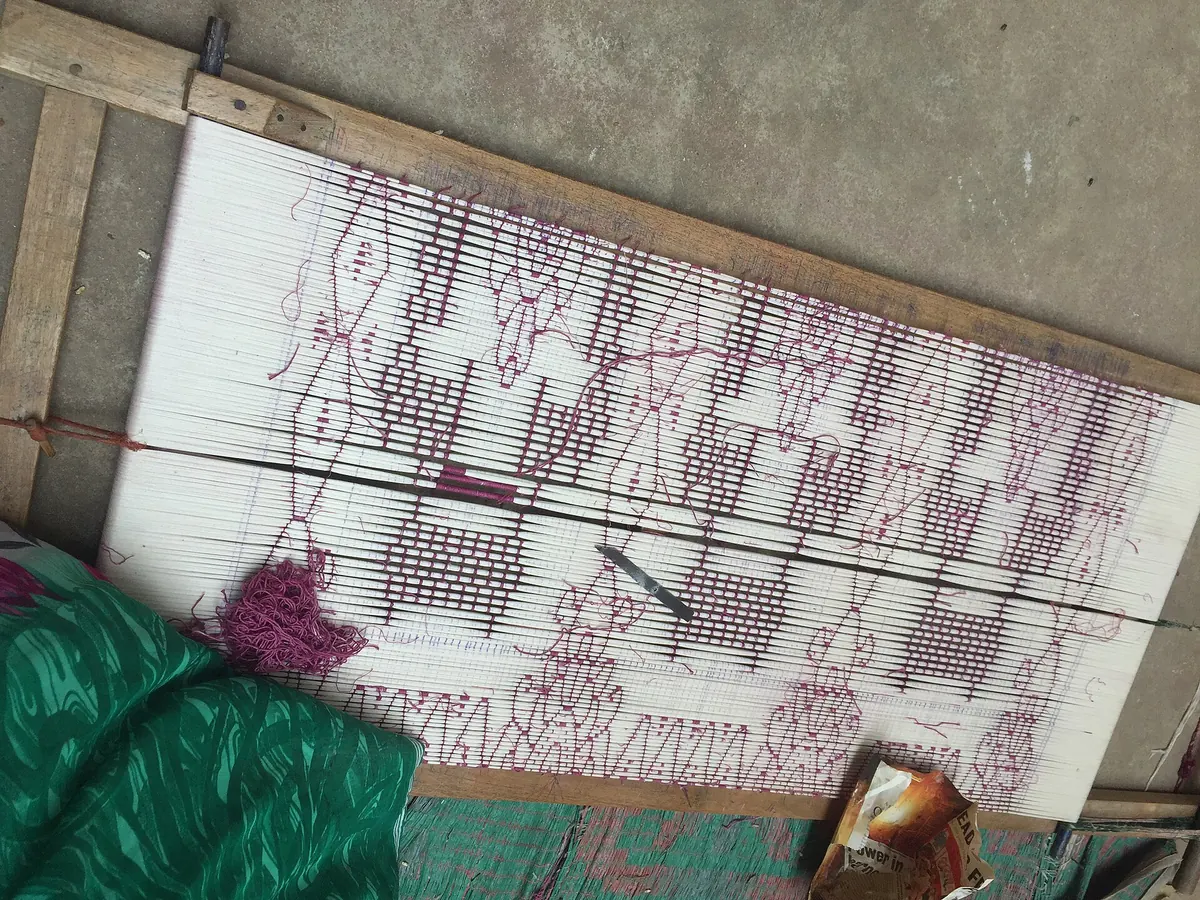
In most cloth the pattern is made at the loom, or printed on afterwards. In ikat it is made in the thread, before there is any cloth at all. That is the whole trick, and the whole difficulty: the weaver has to know, while the yarn is still a skein, exactly where every colour will land once it is woven.
- 1ନକ୍ସାplotThe design is drawn square by square on graph paper. Every square is one crossing of thread.
- 2ବାନ୍ଧtieThe yarn is stretched on a frame and bound tight wherever the colour must not go.
- 3ରଙ୍ଗdyeInto the dye. The bound places stay pale. For each new colour, untie, retie, dye again.
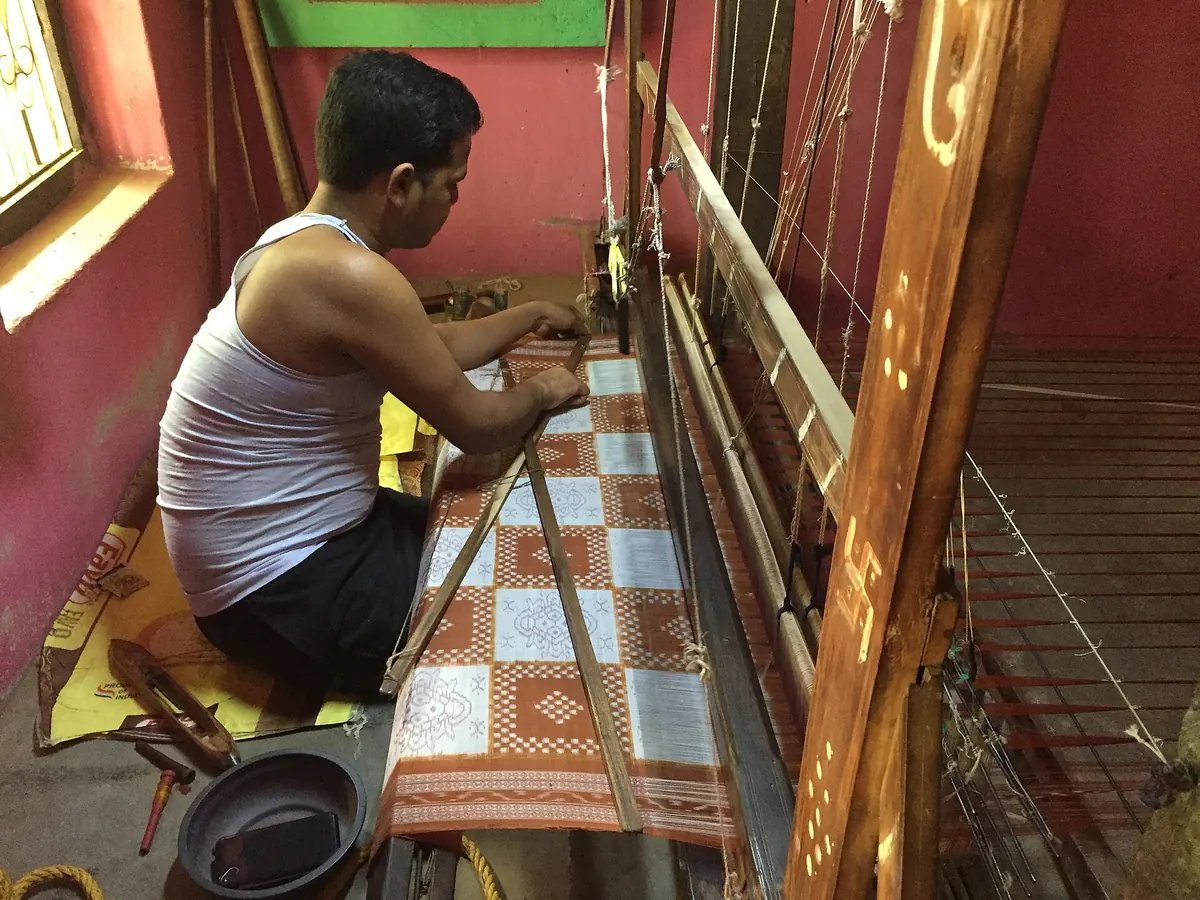
- 4ବୁଣାweaveOnly now does it reach the loom, and the picture arrives one row at a time.


2 Who weaves it
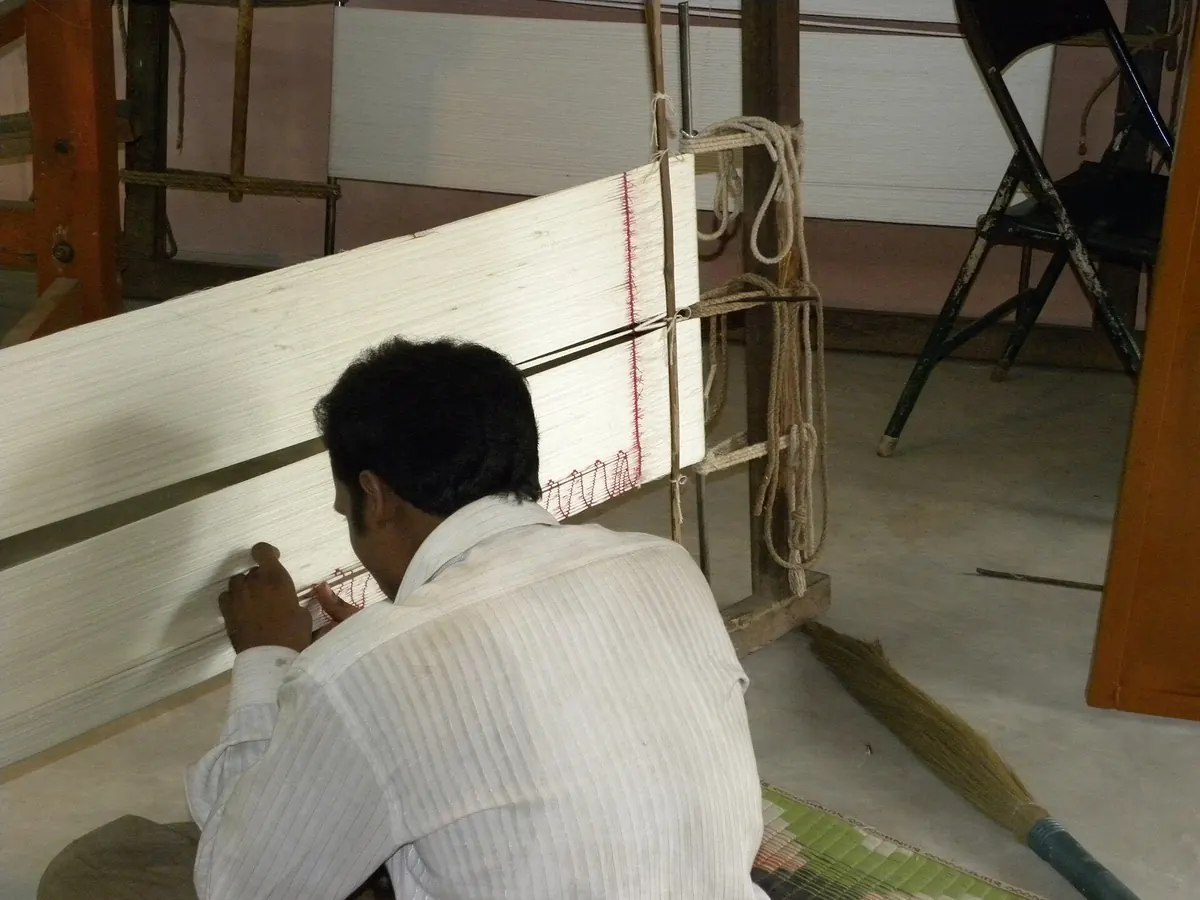
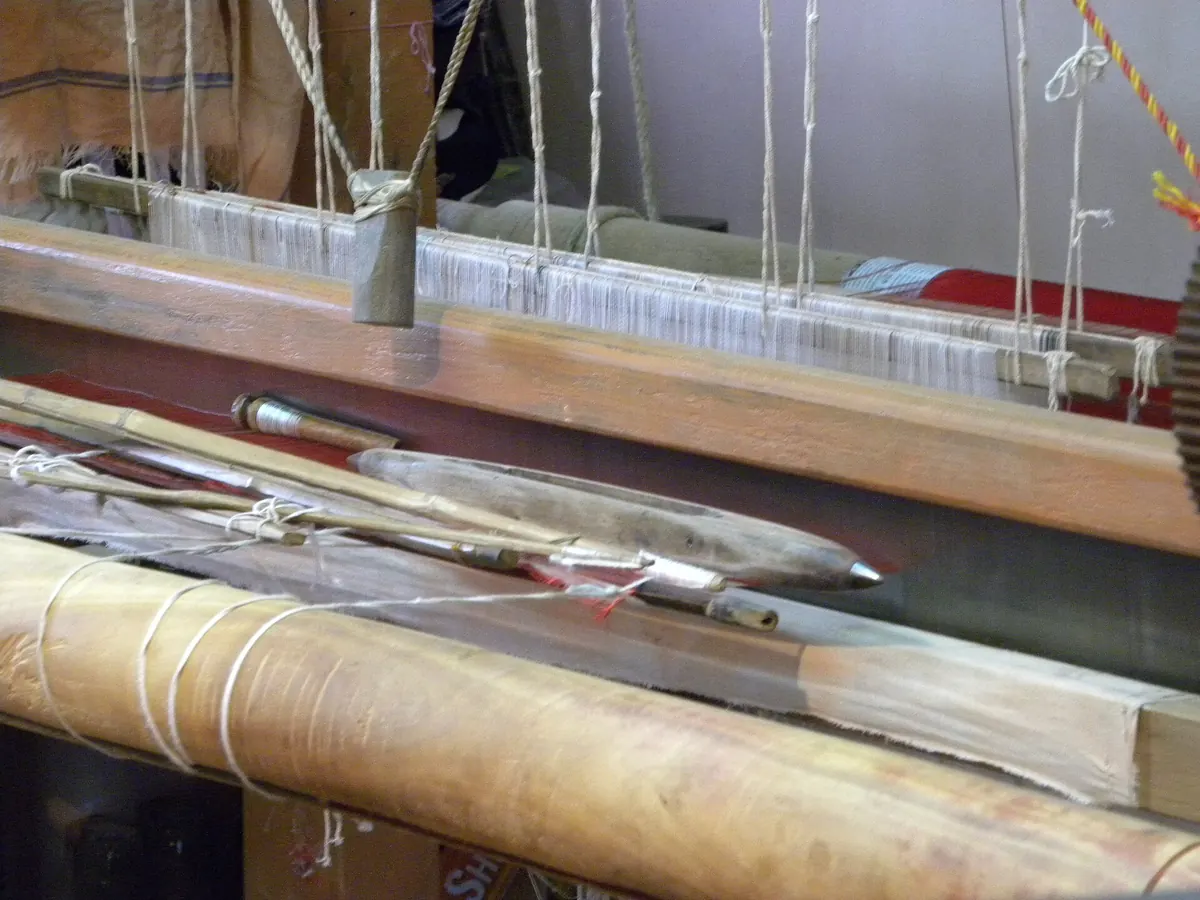
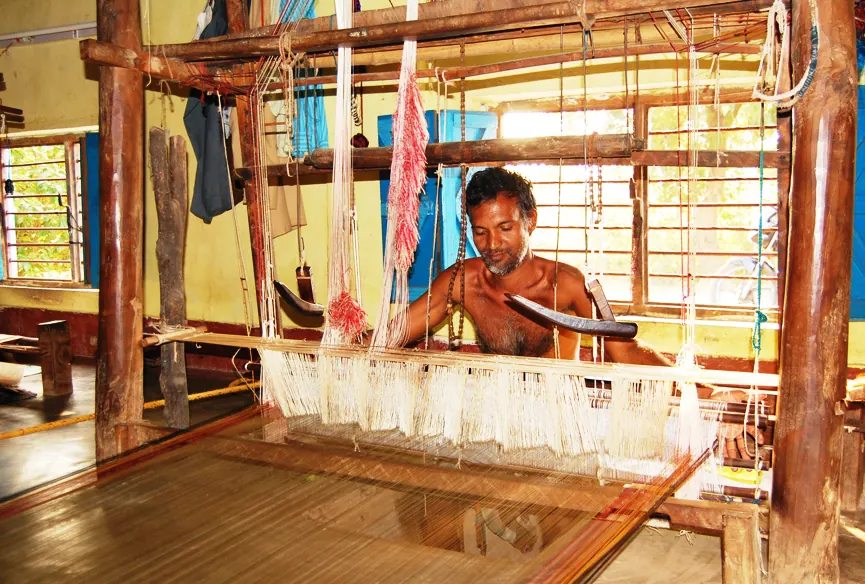
Bandha comes from the looms of western Odisha, around Sambalpur, Bargarh and Sonepur. It is woven mostly at home, on pit looms, by families who have done it for generations: the Bhulia community above all, alongside Kosta Meher and Ganda weavers.
A single saree can hold thousands of tied points, and every one of them was placed by hand. The graph paper isn’t a sketch. It is the program, and a mistake in it shows up in every repeat.


3 Plot one yourself
Pick a motif, change its squares, and follow it through the three stages: the graph paper, the tied threads, the cloth.
1 Plot it on graph paper
Click a square: dyed, then half (where the dye will bleed), then plain. Mirrored, like the motifs themselves.
2 Tie the threads
Each row is one thread. The plain stretches get bound tight so the dye can’t reach them; the rest drinks the colour. Written down, a row is just counts.
4· 1# 4·3· 3# 3·1· 1# 1· 1+ 1# 1+ 1· 1# 1·3# 1· 1# 1· 3#1· 1+ 2# 1· 2# 1+ 1·3# 1· 1# 1· 3#1· 1# 1· 1+ 1# 1+ 1· 1# 1·3· 3# 3·4· 1# 4·
38 of 81 squares take dye. A computer would call these counts run-length encoding. The weaver just calls it the plan.
3 Weave, and let the threads slip
Dyed threads never line up exactly once they’re on the loom. Each row drifts a little, and the edges feather. That blur is how you tell ikat from print.
4 What the motifs are drawn from
The motifs come from what is close by: the temple, its rituals, the river and the field. They are drawn in squares because that is all the thread allows. A curve is a staircase, planned.
- ଶଙ୍ଖ conch the conch, blown at worship
- ଚକ୍ର wheel a wheel: the one atop the temple at Puri, the ones carved at Konark
- ଫୁଲ flower a flower, counted out petal by petal
- ମାଛ fish a fish, a sign of good fortune in a land of rivers
- କୁମ୍ଭ temple spire the stepped spire that runs along a border, over and over
- ଦେଉଳ temple the temple itself, tier on tier
5 Pasapali: the board
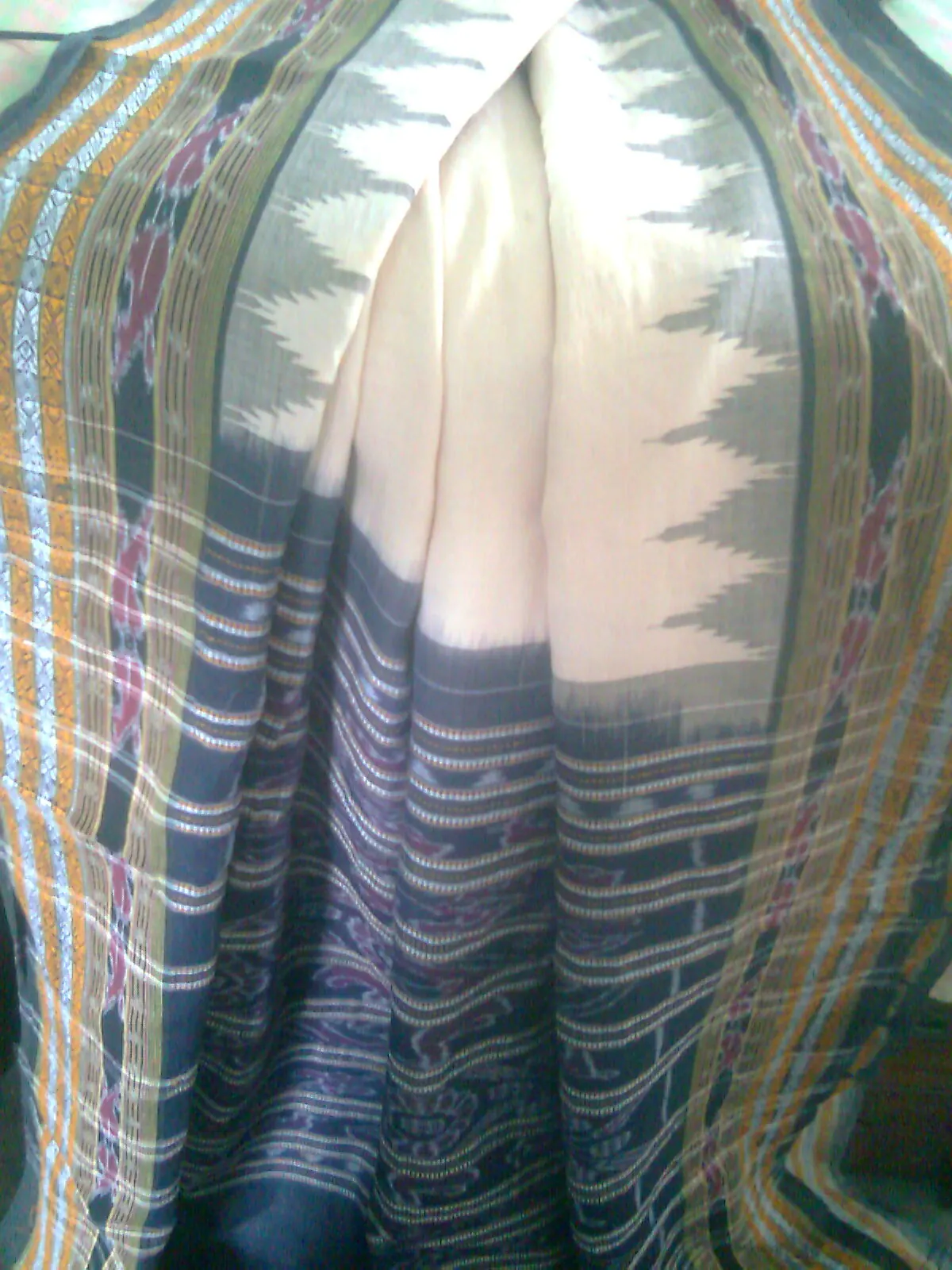
One Sambalpuri weave, pasapali, from around Barpali, is named for a game. Its chequered squares, often red and black, copy the board of pasa, the dice game of the Mahabharata: the game in which a kingdom was lost.
So the cloth already knew it was a grid. Hold that thought until the last section.
6 Words in the weft
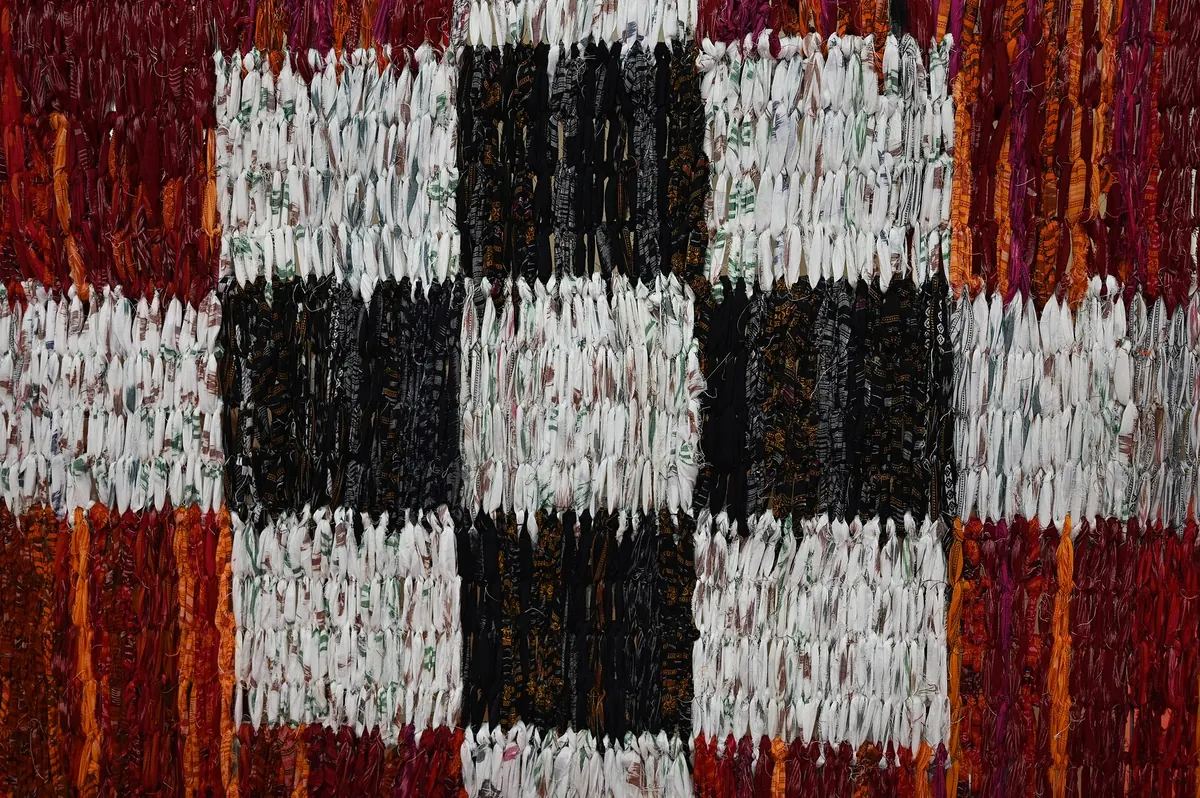
At Nuapatna, near Cuttack, weavers tie text into thread. Their silk ikat cloths for Jagannath at Puri carry verses from the Gita Govinda, Jayadeva’s twelfth-century poem, worked into the weft one row at a time. A temple record from 1719 mentions a bandha gita govinda being woven there.
Every letter has to be planned on the thread before the poem exists as cloth. This site writes on palm leaf for the same reason it borrows bandha: both are ways of making text slowly. Try a word of your own. The letters are the same 8×8 squares the game in the footer is drawn with.
7 A cloth that weaves itself
Bandha is decided entirely in advance. Nothing on the loom gets a vote. In 1970 the mathematician John Conway invented a grid that works the other way round. He called it the Game of Life, though nobody plays it. You set it up, press start, and watch.
Think of each square as a house on a crowded street, and the eight squares touching it as its neighbours. On every tick of the clock, every square looks at its neighbours at the same moment and follows three rules:
- Lonely A dyed square with fewer than two dyed neighbours goes plain.
- Crowded A dyed square with more than three goes plain too.
- Born A plain square with exactly three dyed neighbours takes the dye.
Anything else stays as it is. That’s the whole thing. Nobody draws the next picture; the rules do, one generation at a time. The surprise, and the reason people have played with it for more than fifty years, is how much comes out of so little: shapes that freeze, shapes that blink, and gliders, little shapes of five squares that crawl across the grid forever.
Start it from a bandha motif and watch the plan come undone: most of it dies, some of it freezes into small still shapes, and now and then something walks off across the cloth on its own. Squares dyed this generation show at half strength, like a feathered edge.
The starting cloths are laid out the way sarees are: butis in a half-drop across the body, a row of spires along each edge, the nine squares of a nabakothi with no two neighbours alike. Click or drag to dye your own.
What the screen and the loom share
Both build a picture one line at a time. A cathode-ray tube swept its beam across each row; a weaver passes the shuttle across each row. The difference is the order of the work: on a screen the colour is decided as the line is drawn, and in bandha it is decided days earlier, on the thread, before the line exists.
The half squares are the honest part. Real threads drift, so the edges of a bandha motif feather instead of stepping cleanly. On this site those squares are drawn at half strength and nudged along the row, so the dividers blur the way the cloth does.
Sources: Khandua (Wikipedia), Textiles for the Lord of the Universe (Selvedge), Odisha’s GI handlooms (OdishaBytes), and Martin Gardner’s column on Life, Scientific American, October 1970. Photographs from Wikimedia Commons, credited under each: Bhagirathipatra’s are public domain; the others are CC BY 3.0, CC BY-SA 3.0 or CC BY-SA 4.0, used under those licences.